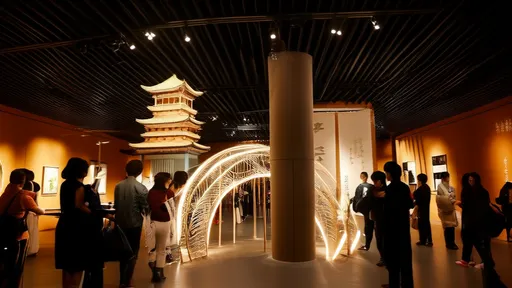
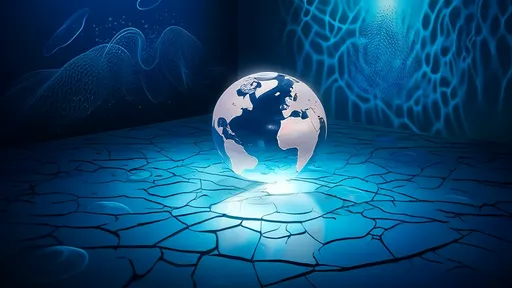
In the historic port city of Hamburg, where the Elbe River meets the North Sea, an extraordinary cultural dialogue unfolded that transcended geographical boundaries and linguistic barriers. The Hamburg Dialogue between Chinese and German artists, held throughout autumn, became a living testament to art's unique capacity to build bridges where words alone may falter. Against the backdrop of Hamburg's UNESCO World Heritage site Speicherstadt and its contemporary Elbphilharmonie concert hall, the event created a vibrant tapestry of cross-cultural exchange that resonated deeply with participants and audiences alike.
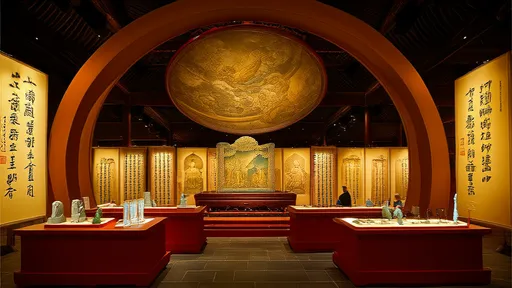
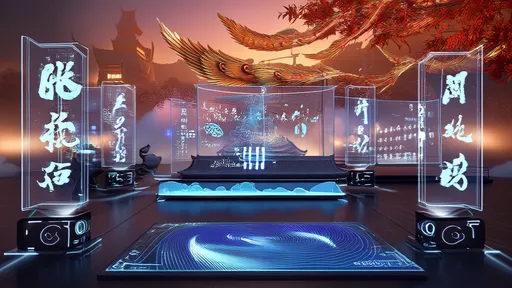
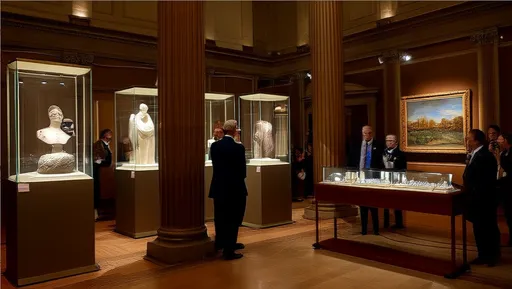
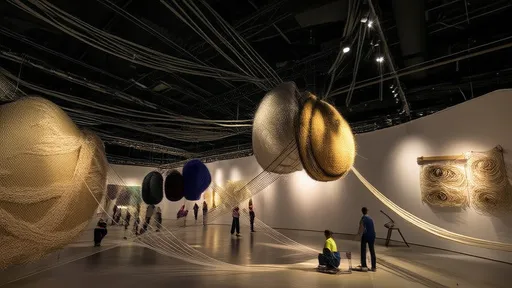
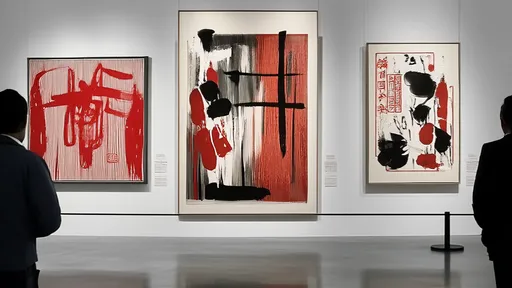
The dialogue commenced not with formal speeches but with brushstrokes, as calligrapher Li Wei from Shanghai and Berlin-based installation artist Anna Schmidt collaboratively created a work that merged Chinese ink wash techniques with European abstract expressionism. What began as separate artistic approaches gradually blended into a harmonious visual conversation, mirroring the very essence of the event. Visitors observed in fascination as the artists, who shared no common language, communicated through the universal vocabulary of form, color, and movement. Their finished piece, titled "Convergence," now hangs in Hamburg's Museum of Arts and Crafts as a permanent reminder of this intercultural connection.
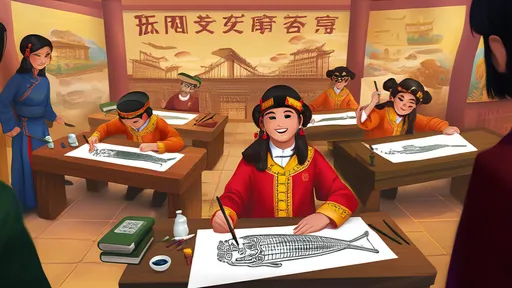
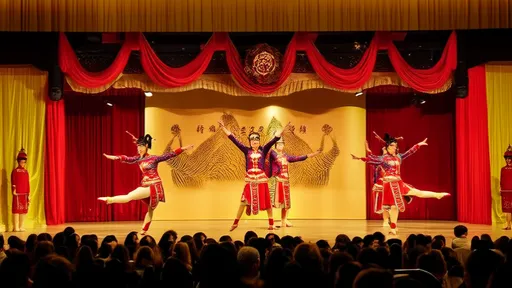
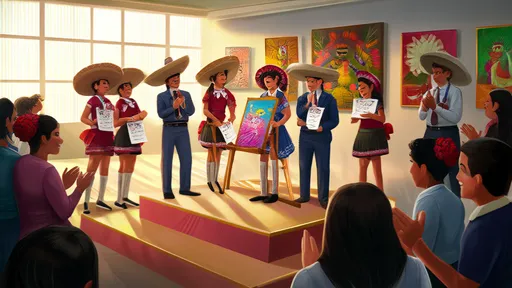
Throughout the three-week program, the dialogue took multiple forms across various Hamburg venues. At the Kampnagel International Cultural Center, traditional Chinese puppetry met German physical theater in a groundbreaking performance that explored themes of migration and belonging. Meanwhile, at the Confucius Institute, a series of workshops allowed German art students to learn the intricate art of Chinese paper-cutting while Chinese participants discovered the precision of German woodcut techniques. These hands-on experiences created microcosms of cultural exchange where technical skills became secondary to the human connections forged through shared creative endeavor.
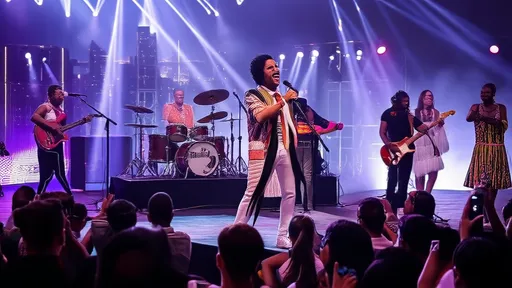
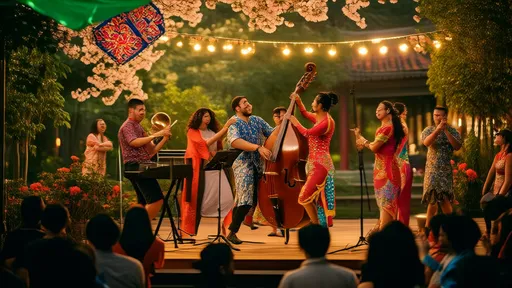
The musical component of the dialogue proved particularly powerful in demonstrating art's ability to speak directly to the human spirit. A joint concert featuring the Hamburg Symphony Orchestra and musicians from China's Central Conservatory of Music presented a program that seamlessly wove together compositions by Tan Dun with works by German contemporary composer Wolfgang Rihm. The musical fusion created an auditory landscape where Eastern and Western traditions didn't merely coexist but enriched one another, producing harmonies that felt both familiar and entirely new. Audience members described the experience as transformative, noting how the music seemed to bypass intellectual analysis and speak directly to the heart.
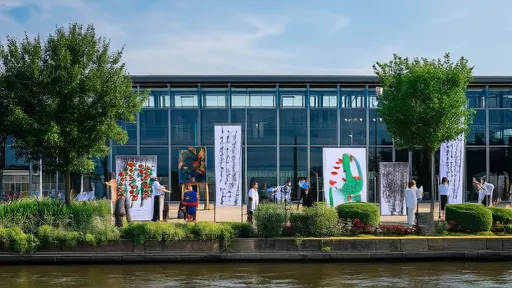
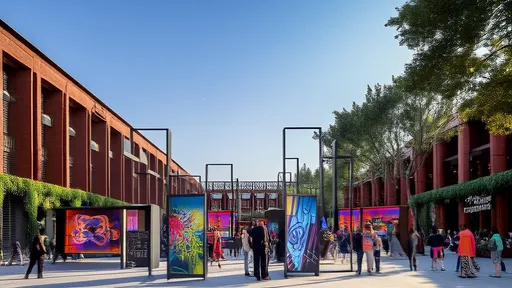
Perhaps the most poignant moments occurred during the collaborative mural project in Hamburg's HafenCity district. Here, artists from both countries worked alongside community members to create a large-scale public artwork celebrating shared human values. Children from local schools, elderly residents, and newly arrived immigrants all contributed to the vibrant mural that now adorns the walls of a public square. This inclusive approach demonstrated that artistic dialogue isn't limited to professional creators but can involve entire communities in building understanding. The mural's imagery—incorporating symbols from both cultures alongside universal motifs of family, nature, and hope—visually represents the dialogue's core message: that beneath surface differences, human aspirations share common roots.
The philosophical dimensions of the dialogue were explored through a series of talks at the University of Hamburg, where artists, curators, and cultural theorists examined the deeper significance of Sino-German artistic exchange. These discussions revealed striking parallels between German Romanticism's emphasis on emotional expression and Chinese artistic traditions that value the conveyance of spirit and essence. Participants noted how both cultures, despite their distinct historical paths, have long recognized art's capacity to express what cannot be contained within the limitations of language. These academic exchanges provided intellectual framework for the practical artistic collaborations, enriching the overall dialogue with historical context and theoretical depth.
As the Hamburg Dialogue drew to a close, its impact extended beyond the immediate artistic productions. Lasting partnerships were formed between cultural institutions in Hamburg and Shanghai, with plans already underway for reciprocal exchanges. More importantly, participants described personal transformations—how the experience had fundamentally altered their perceptions of the other culture and, indeed, of art's purpose in contemporary society. German photographer Klaus Richter, who collaborated with Chinese video artist Zhang Min on a multimedia installation, expressed that the process had changed his approach to image-making. "We discovered that our artistic concerns were remarkably similar despite coming from different traditions," Richter noted. "This dialogue reminded me that art ultimately serves to connect human beings across all artificial divisions."
The success of the Hamburg Dialogue suggests a promising model for cultural diplomacy in an increasingly fragmented world. By focusing on shared creative practice rather than political negotiation, the event created a space where genuine connection could flourish organically. The artworks produced during the dialogue stand as tangible evidence of what becomes possible when artists lead the way in bridge-building between cultures. As Hamburg's culture senator noted in his closing remarks, "In a time when differences often dominate headlines, this dialogue reminds us of the profound connections that art can reveal between peoples. These artistic exchanges create threads of understanding that, woven together, form a stronger fabric of international relations."
Looking forward, the organizers envision the Hamburg Dialogue as the beginning of an ongoing conversation rather than a singular event. Plans are already developing for expanded collaborations that will include digital art forms and virtual exchanges, allowing the connection between Chinese and German artists to continue evolving. The resonance of this year's dialogue demonstrates that in the universal language of art, we find not only beauty but pathways to mutual understanding. In the words of Chinese painter Liu Yang, who participated in the exchange, "Art speaks to what is most human in all of us. When we create together, we build bridges not between cultures, but between hearts."
By /Sep 25, 2025
By /Sep 25, 2025
By /Sep 25, 2025
By /Sep 25, 2025
By /Sep 25, 2025
By /Sep 25, 2025
By /Sep 25, 2025
By /Sep 25, 2025
By /Sep 25, 2025
By /Sep 25, 2025
By /Sep 25, 2025
By /Sep 25, 2025
By /Sep 25, 2025
By /Sep 25, 2025
By /Sep 25, 2025
By /Sep 25, 2025
By /Sep 25, 2025
By /Sep 25, 2025
By /Sep 25, 2025
By /Sep 25, 2025
