In the heart of Panama, where the dense rainforest meets the modern world, a musical revolution is quietly unfolding. A collective of musicians, known as the Guardians of the Mountain, is captivating audiences by weaving the ancient, whispered words of their ancestors with the raw, electric energy of rock and roll. Their performances are not merely concerts; they are visceral, spiritual journeys that bridge centuries, leaving audiences both exhilarated and profoundly moved.
The band's formation was almost serendipitous. It began with a chance meeting between a young ethnomusicologist, Sofia, and a village elder, Don Kuna, in a remote community in the Darién Province. Sofia was documenting near-extinct dialects, while Don Kuna was one of the last fluent speakers of his people's language, a tongue rich with sounds describing the spirit of the wind, the wisdom of the jaguar, and the stories of the land. He feared the language would die with his generation. Sofia, a talented guitarist who had played in rock bands in Panama City, saw a different future. She envisioned a fusion, a way to make these ancient sounds resonate with a new generation. She introduced Don Kuna to the driving beat of a drum machine and the wail of an electric guitar. To her surprise, the elder’s eyes lit up. He didn't hear noise; he heard a new kind of thunder, a modern echo of the powerful forces his own songs had always described.
This initial spark grew into the Guardians of the Mountain. The band is a unique ensemble. Alongside Sofia on guitar and vocals are members from various indigenous backgrounds, each bringing their own linguistic and musical heritage. They incorporate traditional instruments like the gaita (a type of flute) and rattles made from seeds and shells, which are run through effects pedals to create otherworldly sounds. The core of their music, however, is the language itself. The lyrics are not translations of rock standards; they are original compositions built around the rhythms and phonetics of the ancient words. A song might be a traditional chant about a river god, but it's set against a backdrop of distorted power chords and a pulsating bassline.
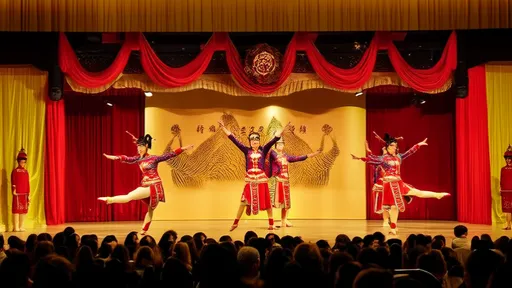
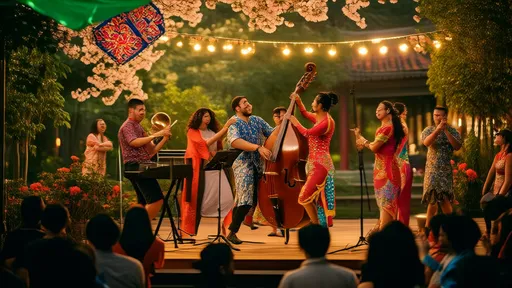
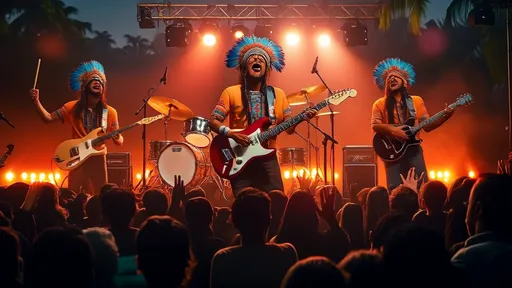
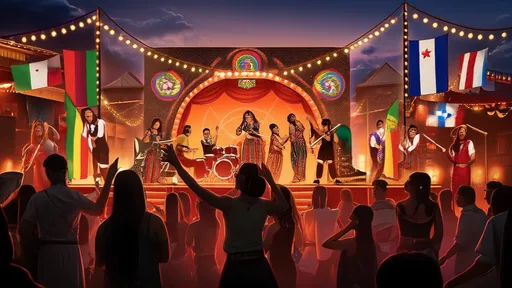
Their live performances are where the magic truly ignites. The stage is often adorned with symbolic elements from their cultures—colorful textiles, carvings, and plants. The band members perform in a mix of modern attire and traditional dress, a visual representation of their musical fusion. When they begin to play, the transformation is palpable. The opening notes of a song might be a delicate, haunting melody from a flute, soon joined by the deep, resonant voice of one of the elder singers intoning a blessing. Then, with a sudden crash, the full band kicks in. The contrast is jarring at first, but it quickly coalesces into a powerful, cohesive whole.
The audience reaction is a study in captivated energy. At a recent festival in Panama City, the crowd was a diverse mix of young rock enthusiasts, curious tourists, and older community members. As the Guardians launched into their set, you could see the initial confusion on some faces give way to fascination, and then to unrestrained enthusiasm. The rhythmic, percussive nature of the ancient language, even if not understood literally, communicated on a primal level. The crowd didn't need a dictionary to feel the urgency in the singer's voice or the triumph in the chorus. They moved, they cheered, they felt the music in their bones. Young fans, who might never have heard these languages spoken, were shouting along to the choruses by the end of the night, their voices joining in a celebration of cultural preservation.
This phenomenon touches on something deeper than simple entertainment. In a globalized world where homogenized pop culture often dominates, the Guardians of the Mountain are asserting a powerful identity. They are not treating their heritage as a museum piece to be observed from a distance. Instead, they are actively engaging with it, challenging it, and allowing it to evolve. They are demonstrating that cultural preservation does not have to mean stagnation. It can be a dynamic, living process. By placing their ancestral tongue in a contemporary context, they are ensuring its survival in the most effective way possible: by making it relevant, exciting, and cool.
The band's impact extends beyond the concert venue. They have become figures of cultural pride for indigenous communities across Panama. Younger generations, who might have previously viewed their traditional languages as obsolete or a hindrance to modern life, now see them as a source of unique power and creativity. The Guardians actively work with schools in rural areas, holding workshops where they teach children songs in their native languages, using rock music as the hook. They are quite literally using the power of rock and roll to save their heritage from extinction.
Critics and ethnomusicologists have taken note, praising the project for its authenticity and innovation. It stands in stark contrast to more superficial attempts at "world music" fusion. The Guardians are not simply adding exotic flavors to a Western musical template; they are building a new musical language from the ground up, with the ancient tongue as its foundation. The rock elements serve to amplify the emotional content of the traditional stories, giving them a new urgency and scale.
As the final chords of their performance ring out and the cheers of the audience swell, the members of the Guardians of the Mountain stand together on stage, drenched in sweat and smiling. In that moment, the divide between ancient and modern, between the sacred and the secular, vanishes. They have not just played a set of songs; they have conducted a ritual for the 21st century. They have proven that the spirit of the rainforest can find a home in the heart of the city, and that the voices of the past, when given a powerful enough amplifier, can not only be heard but can set a whole new generation on fire.
By /Sep 25, 2025
By /Sep 25, 2025

By /Sep 25, 2025
By /Sep 25, 2025

By /Sep 25, 2025
By /Sep 25, 2025
By /Sep 25, 2025
By /Sep 25, 2025

By /Sep 25, 2025
By /Sep 25, 2025
By /Sep 25, 2025
By /Sep 25, 2025
By /Sep 25, 2025
By /Sep 25, 2025
By /Sep 25, 2025
By /Sep 25, 2025

By /Sep 25, 2025

By /Sep 25, 2025
By /Sep 25, 2025
By /Sep 25, 2025
