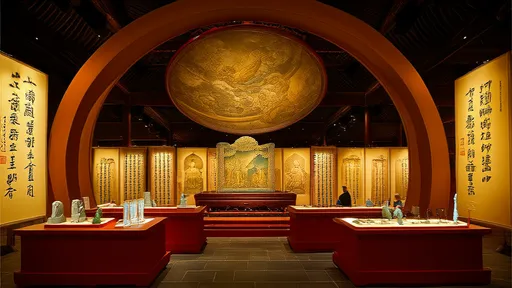
In the hushed galleries of the Zhejiang Art Museum, a quiet revolution is unfolding. The 2023 Hangzhou Triennial of Fiber Art, titled "Unexpected Fields," is not merely an exhibition; it is a profound statement on the evolving status of fiber as a medium and its potent commentary on contemporary society. For decades, if not centuries, fiber arts—encompassing weaving, embroidery, tapestry, and textile-based practices—were relegated to the margins of the art world, often dismissed as "craft" or "women's work." This triennial, however, positions these practices squarely at the center of critical artistic discourse, arguing compellingly that the very materiality of fiber carries deep social, political, and ecological meanings.
The journey of fiber art from the periphery to the mainstream is a narrative of reclamation and redefinition. Historically, the hierarchy of artistic media placed painting and sculpture at the apex, while textiles were associated with domesticity, utility, and decoration. This gendered and functional bias led to its exclusion from the canon of "high art." The curatorial vision of this year's Hangzhou Triennial directly challenges this historical oversight. It presents fiber not as a secondary medium, but as a primary language through which artists interrogate the most pressing issues of our time: globalization, labor, memory, and environmental crisis. The thread, the knot, the weave—these are no longer just techniques; they are metaphors for connection, repair, and the intricate fabric of human existence.
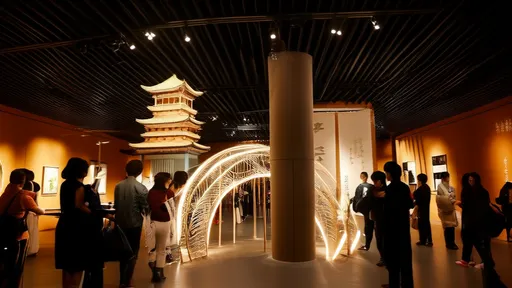
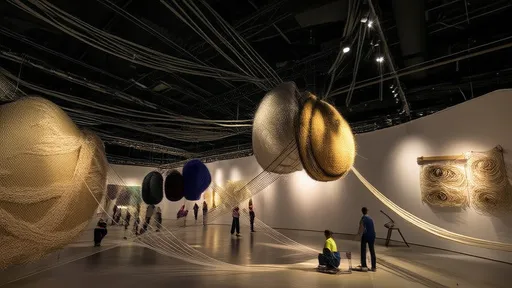
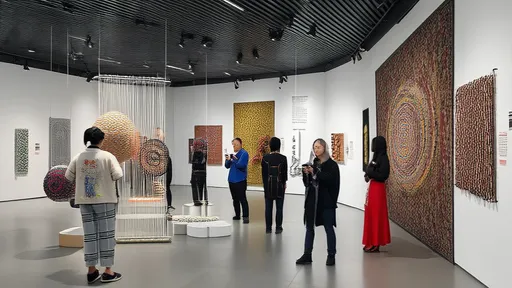
Walking through the exhibition, one is immediately struck by the sheer diversity and scale of the works on display. Gone are the small, delicate embroideries confined to quiet corners. In their place are monumental installations that command space and demand attention. A towering structure made of interwoven bamboo and recycled plastic filaments by a collective from Southeast Asia speaks to the tension between traditional craftsmanship and industrial waste. Another piece, a vast, suspended net woven from discarded fishing lines and maritime ropes, evokes both the beauty and the fragility of oceanic ecosystems. These works are not just visually arresting; they are conceptually robust, using the inherent properties of their materials to tell complex stories. The softness of fabric contrasts with harsh political realities; the labor-intensive process of weaving mirrors the often-invisible work of marginalized communities.
The social significance of material is a recurring theme that pulses through the triennial. Many artists use fiber to explore issues of identity and cultural heritage. For instance, a series of tapestries incorporates traditional patterns from indigenous communities, but upon closer inspection, the patterns are interwoven with digital code and corporate logos, creating a powerful commentary on cultural assimilation and resistance in the digital age. Another artist uses hand-spun wool dyed with natural pigments to create a map that charts migration routes, the threads literally tracing the paths of human displacement. In these artists' hands, fiber becomes a carrier of memory and a witness to history. The act of stitching or weaving becomes a form of storytelling, a way to mend fragmented narratives and preserve cultural knowledge that might otherwise be lost.
Furthermore, the triennial highlights the deeply political nature of textile production. The global textile industry is infamous for its exploitative labor practices and environmental impact. Several works confront this reality head-on. One installation features bolts of raw cotton suspended from the ceiling, accompanied by audio recordings of factory workers from different parts of the world. The piece forces viewers to consider the human cost behind the materials we wear and use every day. Another project involves a collaborative weaving workshop where visitors are invited to contribute to a large communal textile, directly engaging with the material and, by extension, with the concepts of collective labor and shared responsibility. This demystification of the creative process is a radical act, breaking down the barrier between the artist, the artwork, and the audience, and emphasizing that the social meaning of a material is shaped at every stage of its lifecycle.
The ecological dimension of fiber art is another critical axis of the exhibition. In an era of climate crisis, artists are increasingly turning to sustainable practices and materials that comment on consumption and waste. We see works created from upcycled clothing, plastic bags, and industrial off-cuts. These pieces challenge the notion of value and disposability. A delicate lacework made from unraveled medical masks, for example, is a poignant reminder of the recent pandemic and the environmental aftermath of single-use plastics. By transforming waste into objects of beauty and contemplation, these artists propose a model of circularity and mindful production. They suggest that art can, and must, engage with the material world in a responsible way, offering alternatives to the extractive logic of capitalism.
The Hangzhou Triennial, therefore, does more than just showcase beautiful objects. It constructs a powerful argument for the relevance of fiber art in the 21st century. By moving these practices from the edge to the center, the curators assert that the languages of thread and textile are uniquely equipped to address the complexities of our interconnected world. The medium's historical association with the domestic, the feminine, and the utilitarian is not its weakness but its strength. It is precisely these connections to everyday life, to the body, and to intimate forms of labor that give fiber art its profound social resonance.
As visitors leave the museum, the impression left is not simply one of aesthetic appreciation, but of a shifted perspective. The triennial successfully demonstrates that the choice of material is never neutral. A piece of cloth can be a flag, a blanket, a bandage, or a banner. It can comfort, conceal, protect, or protest. The "Unexpected Fields" of the title are found wherever fiber intersects with human experience—in the fields of economics, ecology, politics, and personal memory. The exhibition marks a significant milestone, signaling that fiber art has definitively shed its marginal status to become a vital and indispensable voice in the global conversation about who we are and what kind of world we are weaving for the future.
By /Sep 25, 2025
By /Sep 25, 2025
By /Sep 25, 2025
By /Sep 25, 2025
By /Sep 25, 2025
By /Sep 25, 2025
By /Sep 25, 2025
By /Sep 25, 2025
By /Sep 25, 2025
By /Sep 25, 2025
By /Sep 25, 2025
By /Sep 25, 2025
By /Sep 25, 2025
By /Sep 25, 2025
By /Sep 25, 2025
By /Sep 25, 2025
By /Sep 25, 2025
By /Sep 25, 2025
By /Sep 25, 2025
By /Sep 25, 2025
