The hum of a guitar amplifier, the thump of a kick drum, or the soaring vocals of a late-night recording session—these are the sounds that define a music studio. But when those sounds escape the studio walls, they can become a nuisance to neighbors or disrupt other sessions within the same building. For professional and home studios alike, soundproofing is not just a luxury; it’s a necessity. Whether you’re dealing with noisy surroundings or trying to prevent your music from disturbing others, a well-executed acoustic treatment can make all the difference.
Soundproofing a music studio requires a combination of materials, techniques, and structural adjustments. Unlike general room acoustics, which focus on improving sound quality inside the space, soundproofing aims to block sound from entering or leaving the room. This involves addressing airborne noise (like voices or instruments) and impact noise (such as footfalls or vibrations). The goal is to create an isolated environment where musicians can record without interference and without causing disturbances elsewhere.
Understanding the Basics of Sound Transmission
Before diving into solutions, it’s essential to grasp how sound travels. Sound waves move through air and solid structures, and they can find their way through even the smallest gaps. In a typical room, sound escapes through walls, ceilings, floors, doors, windows, and even ventilation systems. To effectively soundproof a studio, each of these pathways must be addressed. The two primary methods of soundproofing are adding mass to block sound and decoupling structures to prevent vibrations from traveling.
Mass-loaded vinyl (MLV), dense drywall, and specialized insulation are commonly used to increase a wall’s sound-blocking capabilities. However, simply adding thick materials isn’t always enough. If walls are rigidly connected, vibrations can still transfer. This is where decoupling comes in—using resilient channels, staggered stud framing, or floating floors to separate surfaces and reduce sound transmission. Combining these strategies creates a more effective barrier against unwanted noise.
Key Areas to Address in Studio Soundproofing
Walls are often the first line of defense, but they’re also the most challenging to reinforce after construction. For existing studios, adding a second layer of drywall with green glue (a damping compound) can significantly improve sound isolation. In new builds, staggered or double-stud walls with insulation provide superior performance. Floors, especially in multi-level studios, require attention to prevent low-frequency vibrations from traveling. Rubber underlayments, carpet padding, or floating floors can mitigate this issue.
Doors and windows are weak points in any soundproofing setup. A standard hollow-core door does little to block sound, so replacing it with a solid-core or specialized acoustic door is crucial. For windows, double or triple glazing with an air gap between panes helps reduce sound leakage. If possible, eliminating windows altogether is the best solution. HVAC systems also pose a challenge—sound can travel through ducts, so incorporating baffles or dedicated acoustic vents is necessary to maintain airflow without compromising isolation.
Common Mistakes and How to Avoid Them
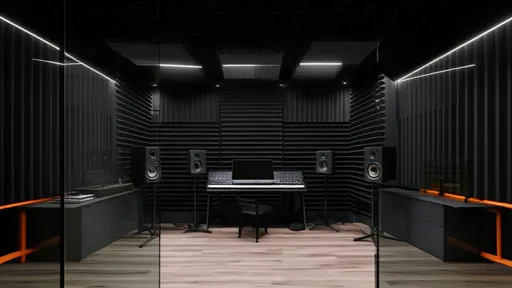
One of the biggest mistakes in studio soundproofing is neglecting small gaps and cracks. Even the most robust walls won’t perform well if sound leaks through unsealed edges. Acoustic caulk and weatherstripping are essential for sealing gaps around doors, windows, and electrical outlets. Another pitfall is over-relying on foam panels. While these improve room acoustics by reducing reflections, they do little to block sound from escaping or entering the room.
Budget constraints often lead to compromises, but cutting corners on critical components like doors or insulation can render the entire project ineffective. It’s better to tackle one area thoroughly than to spread resources too thin. Consulting an acoustic engineer or experienced contractor can help prioritize the most impactful upgrades based on the studio’s specific needs and limitations.
Advanced Techniques for High-Performance Isolation
For those seeking professional-grade results, advanced methods like room-within-a-room construction offer the highest level of sound isolation. This involves building an entirely separate structure inside the existing room, with isolated walls, floors, and ceilings. While costly and space-intensive, this approach is favored in high-end studios where complete sound separation is required.
Another high-performance solution is the use of floating floors on neoprene or spring isolators, which decouple the studio from the building’s structure. Combined with decoupled walls and ceilings, this method minimizes both airborne and impact noise. For critical listening environments, these techniques ensure that external vibrations—from traffic or nearby machinery—don’t interfere with recordings.
Soundproofing a music studio is a complex but rewarding endeavor. By understanding sound transmission, addressing weak points, and avoiding common mistakes, it’s possible to create a space where creativity can flourish without acoustic limitations. Whether for a home setup or a professional facility, the right approach to isolation ensures that the only sounds heard are the ones meant to be there.

By /Aug 13, 2025

By /Aug 13, 2025

By /Aug 13, 2025

By /Aug 13, 2025
By /Aug 13, 2025
By /Aug 13, 2025

By /Aug 13, 2025

By /Aug 13, 2025

By /Aug 13, 2025
By /Aug 13, 2025

By /Aug 13, 2025

By /Aug 13, 2025

By /Aug 13, 2025

By /Aug 13, 2025

By /Aug 13, 2025
By /Aug 13, 2025

By /Aug 13, 2025

By /Aug 13, 2025

By /Aug 13, 2025

By /Aug 13, 2025
